
Review the following scenario and develop conflict
Review the following scenario and develop conflict resolution strategies for employees:
You are part of a Human Resources team for ABC Manufacturing, a mid-sized manufacturing company based in downtown Chicago that transitioned to a fully remote work model during the COVID-19 pandemic. Departments include production, purchasing, marketing, technical, accounting, HR, and customer service. The employee workforce is diverse in terms of culture, socioeconomic status, age, and gender. For over two years, employees have successfully worked from home, utilizing digital tools and platforms to collaborate and maintain productivity. However, the company's leadership has decided that it is essential for team cohesion and innovation to return to an in-office work model. A new policy mandates that all employees must return to the office five days a week, starting next month.
The CEO, Lisa Morgan, sent an email to all employees announcing the new return-to-office policy. The email highlights the perceived benefits of in-person collaboration, including improved communication, stronger team relationships, and enhanced creativity. The policy will take effect in one month, giving employees time to adjust their schedules and make necessary arrangements.
Positive Reaction:
Some employees, like Mark from the marketing team, are excited about the opportunity to reconnect with colleagues face-to-face and believe that in-person meetings will lead to more dynamic brainstorming sessions.
Negative Reaction:
Others, like Jane from the technical team, are frustrated by the change. Jane has relocated to a different city during the remote work period, and commuting to the office five days a week would be highly inconvenient and costly.
What strategies can you implement that address employee concerns and reduce friction?
Developing a Change Management Plan
Outline a step-by-step plan for implementing the proposed conflict resolution strategies.
Include a timeline for the plan's execution and the roles of different stakeholders in this process.
Discuss how the company will monitor and evaluate the effectiveness of the conflict resolution strategies.
Resolving Conflict in ABC Manufacturing’s Office Return
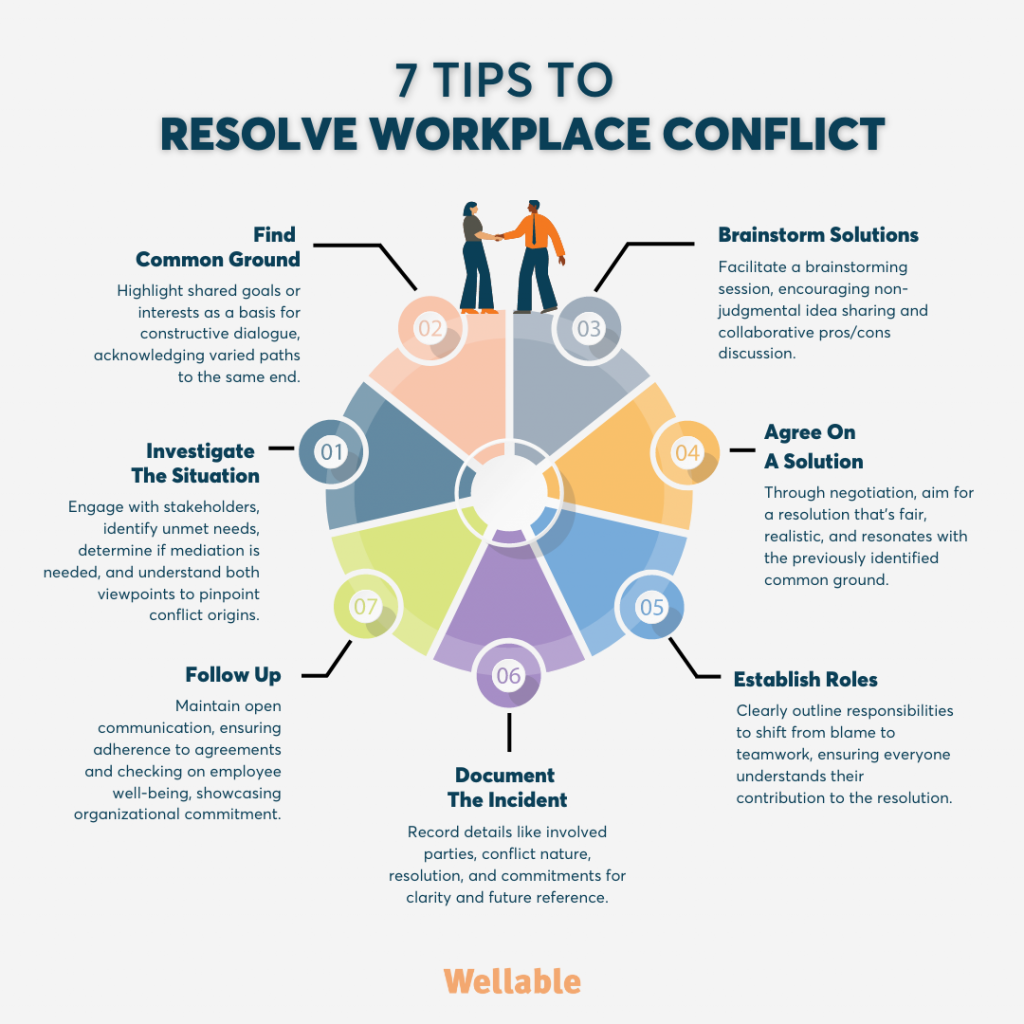
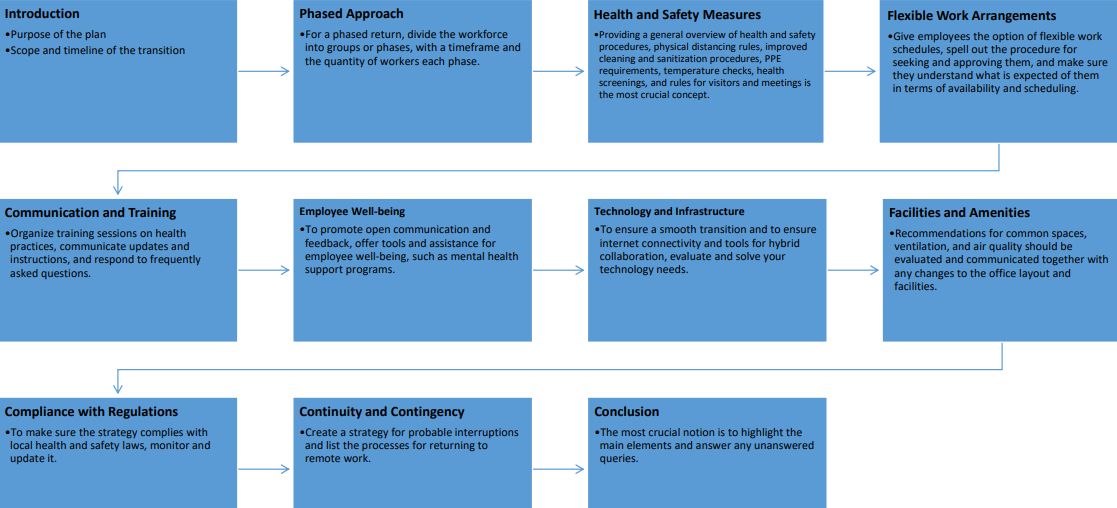
Conflict Resolution Strategies for ABC Manufacturing’s Return-to-Office Transition
The transition from remote work back to an in-office model at ABC Manufacturing poses significant organizational challenges. While some employees welcome the change, others—particularly those who relocated or adapted fully to remote work—experience frustration, uncertainty, and stress. Because the workforce is culturally and socioeconomically diverse, the return-to-office (RTO) policy risks widening divisions unless carefully managed. Human Resources must therefore implement conflict-resolution strategies grounded in communication, empathy, negotiation, and change-management best practices. This paper outlines key strategies to address employee concerns, reduce tension, and implement a structured plan that supports a smooth transition.
Conflict-Resolution Strategies to Address Employee Concerns
1. Two-Way Communication Forums
Communication is essential for managing conflict. HR can host virtual and in-person listening sessions, allowing employees to voice concerns, ask questions, and suggest adjustments to the RTO plan. Research shows that participatory communication reduces resistance by strengthening employee trust (Kotter, 2012). These forums send a signal that the organization values transparency and employee well-being.
2. Flexible Work Arrangements
While leadership requires in-office return, building flexibility into the policy can reduce friction. Options may include:
-
Hybrid schedules (e.g., 3 days in office, 2 remote)
-
Staggered start times
-
Commuting stipends
-
Short-term transitional period
Evidence shows that hybrid models improve morale, productivity, and retention compared to rigid on-site mandates (Choudhury, 2023). For employees like Jane, flexibility prevents disengagement and possible turnover.
3. Individual Accommodation Plans
Employees experiencing extreme hardship (relocation, disability, family care needs) may need personalized solutions. HR can develop a case-by-case accommodation system based on objective criteria. This approach aligns with equity principles and encourages fairness across departments (Cascio & Montealegre, 2016).
4. Mediation Sessions Between Employees and Supervisors
HR-led mediation helps resolve conflict by improving understanding between employees and management. Mediation encourages active listening, empathy, and solution-focused dialogue (Ury, Brett, & Goldberg, 1988). For example, Jane and her manager may collaboratively identify alternatives that meet both operational and personal needs.
5. Cross-Department Team-Building Initiatives
To reduce polarization between enthusiastic and reluctant employees, HR can organize:
-
Reconnection events
-
Collaborative training workshops
-
Mentorship programs
Relationship-building activities create psychological safety and reestablish the sense of community lost during remote work (Edmondson, 2019).
6. Professional Development and Wellness Support
Returning to the office can create stress, financial strain, and logistical challenges. Offering wellness resources—such as counseling, stress-management workshops, or childcare support—helps employees cope with the transition (Cooper & Quick, 2017). Providing transportation subsidies also reduces the burden on commuters.
To ensure an orderly and ethical transition, ABC Manufacturing should adopt a structured change-management plan following recognized frameworks such as Kotter’s Eight-Step Model and Lewin’s Change Theory.
Step-by-Step Change Management Plan
Step 1: Prepare Employees for Change (Week 1)
Stakeholders involved: HR, CEO, Department Heads
Actions:
-
Issue a detailed explanation of why the RTO policy is being implemented.
-
Share data linking in-person collaboration to innovation and team cohesion.
-
Introduce opportunities for feedback through surveys and open forums.
Step 2: Assess Employee Concerns (Weeks 1–2)
Collect feedback from employees via:
-
Online surveys
-
Listening sessions
-
Focus groups
HR analyzes responses to identify major themes—commuting challenges, childcare needs, relocation issues, etc.
Step 3: Design Conflict-Resolution Solutions (Week 3)
Using the feedback, HR finalizes:
-
Flexible work alternatives
-
Accommodation request procedures
-
Staggered scheduling options
-
Support programs (transportation aid, wellness services)
Management reviews and approves these modifications.
Step 4: Communicate Finalized Plan (Week 4)
Deliver the updated RTO transition plan using:
-
Company-wide email
-
FAQ document
-
Department meetings
This stage reinforces clarity and enhances employee confidence (Hiatt, 2006).
Step 5: Begin Transition Period (Month 2)
Employees gradually shift back into the office under the modified plan. HR monitors:
-
Attendance
-
Morale
-
Productivity
-
Accommodation requests
Supervisors are trained to manage conflicts empathetically and escalate concerns to HR when needed.
Step 6: Facilitate Mediation and Support (Months 2–3)
HR provides:
-
One-on-one meetings
-
Mediation sessions
-
Team-building workshops
-
Mental health resources
Teams like marketing and technical may require tailored support due to different reactions (excitement vs frustration).
Step 7: Evaluate and Adjust (Month 3)
HR gathers data from:
-
Pulse surveys
-
Manager interviews
-
Absenteeism and turnover metrics
Adjustments may include altering hybrid options or adding new support resources.
Step 8: Reinforce Long-Term Culture Alignment (Month 4 and ongoing)
To ensure sustained success:
-
Celebrate early wins
-
Promote collaboration success stories
-
Integrate new practices into organizational culture
Maintaining open communication ensures employees remain engaged and committed.
ABC Manufacturing can measure success through both quantitative and qualitative indicators:
Quantitative Metrics
-
Turnover rate: Declining turnover suggests improved acceptance.
-
Absenteeism: Lower absenteeism reflects reduced stress or conflict.
-
Productivity metrics: Stable or rising outputs indicate successful adaptation.
-
Accommodation requests: A high early volume followed by a decline shows adjustment.
Qualitative Metrics
-
Employee satisfaction surveys
-
Feedback from mediation sessions
-
Managerial observations
-
Employee engagement scores
Regular reporting (monthly or quarterly) ensures leaders understand where strategies succeed or require modification. Continuous monitoring is essential for workplace transitions, as change fatigue can develop without ongoing support (Vakola & Nikolaou, 2005).
The mandatory return to office at ABC Manufacturing requires thoughtful conflict-resolution strategies to support employees and maintain morale. By using communication forums, flexible options, individualized accommodations, mediation, wellness programs, and structured change management, the company can reduce tension and support an orderly transition. A transparent process that values employee voices not only minimizes conflict but also strengthens organizational culture and long-term engagement.
Cascio, W. F., & Montealegre, R. (2016). How technology is changing work and organizations. Annual Review of Organizational Psychology and Organizational Behavior, 3, 349–375.
Choudhury, P. (2023). Our work-from-anywhere future. Harvard Business Review, 101(3), 58–67.
Cooper, C. L., & Quick, J. C. (2017). The handbook of stress and health. Wiley-Blackwell.
Edmondson, A. C. (2019). The fearless organization: Creating psychological safety in the workplace. Wiley.
Hiatt, J. (2006). ADKAR: A model for change in business, government, and our community. Prosci.
Kotter, J. P. (2012). Leading change. Harvard Business School Press.
Lewin, K. (1951). Field theory in social science. Harper & Row.
Ury, W., Brett, J., & Goldberg, S. (1988). Getting disputes resolved. Jossey-Bass.
Vakola, M., & Nikolaou, I. (2005). Attitudes toward organizational change. Journal of Managerial Psychology, 20(7), 586–608.
Weiss, J. W. (2020). Organizational change and development. Cengage Learning.